Significance of building enclosure design
A building enclosure does more than shield occupants from the elements—it influences comfort, energy use and ventilation. The enclosure consists of multiple faces: ground floor system, foundation walls, above-grade walls, windows and doors, decks over conditioned space, soffits below occupied space and roofs. Each component plays a role in structural integrity and thermal performance, so design strategies must account for climate and material compatibility to meet owner requirements.
Managing moisture and airflow
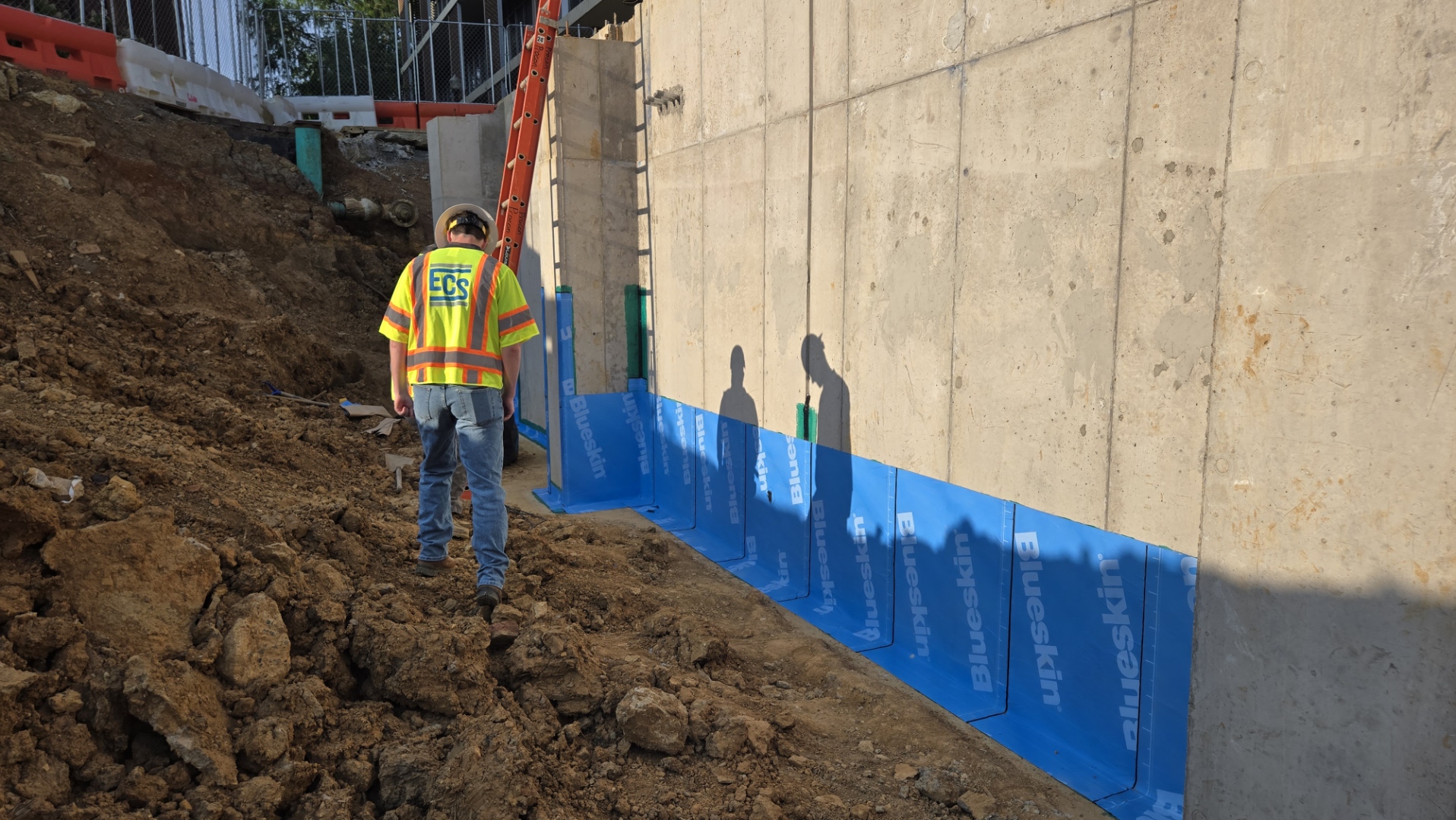
Moisture is one of the greatest threats to building durability. Good enclosure design reduces water accumulation within wall assemblies by incorporating water-resistive barriers behind exterior veneers. Prolonged exposure to moisture can lead to mold growth and weaken materials, so systems such as waterproofing, drainage layers, flashings, sealants and diversion components are necessary.
- Drainage systems (e.g., drainage boards, weep holes) collect water and direct it away from the building.
- Diversion systems (e.g., gutters, downspouts, flashing) move water off roofs and facades to well-planned discharge points.
- Barrier systems (e.g., exterior walls, glazing) keep water out entirely.
Airflow control is just as important. Uncontrolled airflow can cause condensation and energy loss. Strategies such as installing air and moisture barriers, insulating walls and sealing openings help maintain comfort and reduce heating and cooling loads.
Significance of building enclosure design
A building enclosure does more than shield occupants from the elements—it influences comfort, energy use and ventilation. The enclosure consists of multiple faces: ground floor system, foundation walls, above-grade walls, windows and doors, decks over conditioned space, soffits below occupied space and roofs. Each component plays a role in structural integrity and thermal performance, so design strategies must account for climate and material compatibility to meet owner requirements.
Managing moisture and airflow
Moisture is one of the greatest threats to building durability. Good enclosure design reduces water accumulation within wall assemblies by incorporating water-resistive barriers behind exterior veneers. Prolonged exposure to moisture can lead to mold growth and weaken materials, so systems such as waterproofing, drainage layers, flashings, sealants and diversion components are necessary.
- Drainage systems (e.g., drainage boards, weep holes) collect water and direct it away from the building.
- Diversion systems (e.g., gutters, downspouts, flashing) move water off roofs and facades to well-planned discharge points.
- Barrier systems (e.g., exterior walls, glazing) keep water out entirely.
Airflow control is just as important. Uncontrolled airflow can cause condensation and energy loss. Strategies such as installing air and moisture barriers, insulating walls and sealing openings help maintain comfort and reduce heating and cooling loads.