Building Enclosure Design

building enclosure design

Practical details, tested solutions, energy-smart performance

Building owners and property managers face stringent energy codes and growing public demand for lower energy consumption, high-performance features and adjustable interior climate controls. Thoughtful building enclosure design is key to staying competitive while reducing costs. For owners who plan to hold and operate their building for years—such as institutions, universities and healthcare providers—the benefits of a well-designed enclosure pay for themselves many times over throughout the life of the property.

CONTACT US

Building owners and property managers face stringent energy codes and growing public demand for lower energy consumption, high-performance features and adjustable interior climate controls. Thoughtful building enclosure design is key to staying competitive while reducing costs. For owners who plan to hold and operate their building for years—such as institutions, universities and healthcare providers—the benefits of a well-designed enclosure pay for themselves many times over throughout the life of the property.

CONTACT US

building enclosure design

Why ECS for building enclosure design services

Meeting energy codes and performance targets requires details that work in the real world. ECS Group of Companies (ECS) blends design consulting with years of construction observation and field testing to develop practical, buildable solutions that align with your Owner Project Requirements (OPR) and local jurisdictional requirements.

We start with your goals, then apply proven strategies to reduce risk, improve constructability and deliver energy-smart solutions that meet codes and owner expectations.


We are expert building enclosure design consultants

Companies rely on ECS for building enclosure design for several reasons, including:

  • Depth and breadth of design experience
  • Familiarity with complex systems
  • Consulting and testing expertise
  • Customer-first approach
  • History, reputation and robust project portfolio

Why ECS for building enclosure design services

Meeting energy codes and performance targets requires details that work in the real world. ECS Group of Companies (ECS) blends design consulting with years of construction observation and field testing to develop practical, buildable solutions that align with your Owner Project Requirements (OPR) and local jurisdictional requirements.

We start with your goals, then apply proven strategies to reduce risk, improve constructability and deliver energy-smart solutions that meet codes and owner expectations.


We are expert building enclosure design consultants

Companies rely on ECS for building enclosure design for several reasons, including:

  • Depth and breadth of design experience
  • Familiarity with complex systems
  • Consulting and testing expertise
  • Customer-first approach
  • History, reputation and robust project portfolio
building enclosure design

Design, consulting and testing experience

With licensed professionals from coast to coast who are versed in curtain wall systems, traditional facades and historic preservation, ECS leverages decades of experience to serve you and your project. By relying on years of construction observations and field testing, ECS understands what works in the real world and what is required for a practical design. This blend of design and testing experience helps us deliver innovative and excellent solutions to your challenges.

Customer-first approach to building enclosure projects

We prioritize your needs. We start by listening and working together to define the OPR. Then we engage with the design team to provide reasonable, buildable and achievable solutions that are performance-based and cost-effective. Throughout the process, ECS professionals remain focused on your goals and responsive to your requirements.


A trusted name in building enclosure design

ECS has a long history, strong reputation and a robust project portfolio. We invest in developing our staff so they can provide the level of service you require and deserve. Our team brings rich industry expertise, a focus on sustainability and a commitment to safety excellence. When you partner with ECS, you can feel confident that you are working with professionals dedicated to serving clients and the public.


Key ECS projects for building enclosure design

  • Tampa International Airport, Airside D, Tampa, FL
  • 845 West Madison, Chicago, IL
  • Westin Infinite Energy Hotel, Duluth, GA
  • The Trove, Arlington, VA

Customer-first approach to building enclosure projects

We prioritize your needs. We start by listening and working together to define the OPR. Then we engage with the design team to provide reasonable, buildable and achievable solutions that are performance-based and cost-effective. Throughout the process, ECS professionals remain focused on your goals and responsive to your requirements.


A trusted name in building enclosure design

ECS has a long history, strong reputation and a robust project portfolio. We invest in developing our staff so they can provide the level of service you require and deserve. Our team brings rich industry expertise, a focus on sustainability and a commitment to safety excellence. When you partner with ECS, you can feel confident that you are working with professionals dedicated to serving clients and the public.


Key ECS projects for building enclosure design

  • Tampa International Airport, Airside D, Tampa, FL
  • 845 West Madison, Chicago, IL
  • Westin Infinite Energy Hotel, Duluth, GA
  • The Trove, Arlington, VA
building enclosure design

What is the building enclosure?

The building enclosure includes the roof, doors, windows and siding, as well as insulation, air and water barriers, and below-grade foundation waterproofing and under-slab drainage. These components work together to manage heat, air and moisture transfer between indoors and outdoors. A continuous enclosure across six sides of the building is necessary for performance.

Climate drives design choices. In cold regions, insulation and air barriers help retain heat; in hot climates, they keep heat out. Moisture management is important at every level. Waterproofing, drainage layers, flashings, sealants and diversion systems protect against water intrusion. Common elements include drainage boards, weeps, gutters and downspouts. Ventilation and airflow strategies—such as sealing openings and installing air barriers—reduce energy use and improve comfort.

What is the building enclosure?

The building enclosure includes the roof, doors, windows and siding, as well as insulation, air and water barriers, and below-grade foundation waterproofing and under-slab drainage. These components work together to manage heat, air and moisture transfer between indoors and outdoors. A continuous enclosure across six sides of the building is necessary for performance.

Climate drives design choices. In cold regions, insulation and air barriers help retain heat; in hot climates, they keep heat out. Moisture management is important at every level. Waterproofing, drainage layers, flashings, sealants and diversion systems protect against water intrusion. Common elements include drainage boards, weeps, gutters and downspouts. Ventilation and airflow strategies—such as sealing openings and installing air barriers—reduce energy use and improve comfort.

Significance of building enclosure design

A building enclosure does more than shield occupants from the elements—it influences comfort, energy use and ventilation. The enclosure consists of multiple faces: ground floor system, foundation walls, above-grade walls, windows and doors, decks over conditioned space, soffits below occupied space and roofs. Each component plays a role in structural integrity and thermal performance, so design strategies must account for climate and material compatibility to meet owner requirements.


Managing moisture and airflow

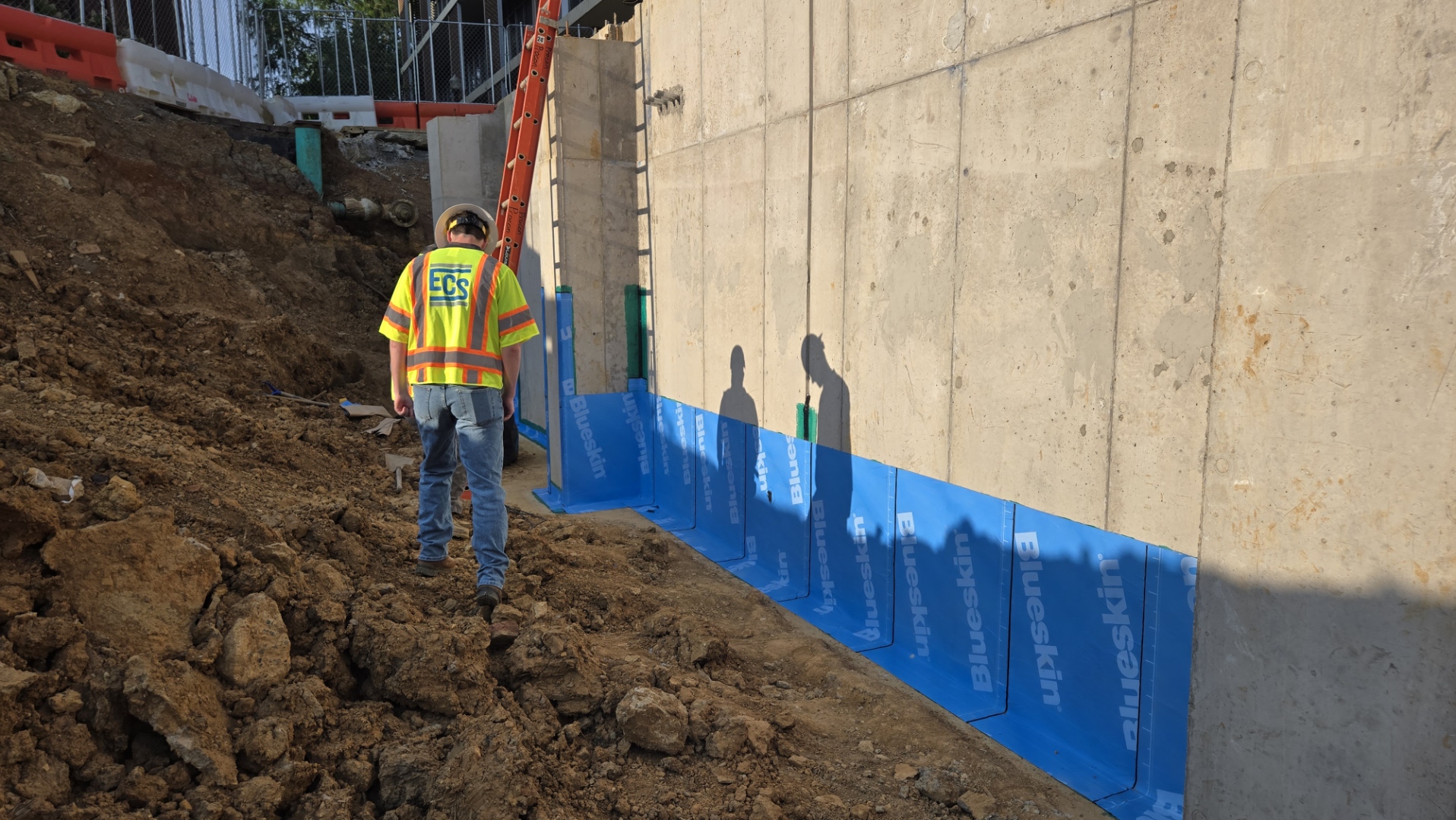
Moisture is one of the greatest threats to building durability. Good enclosure design reduces water accumulation within wall assemblies by incorporating water-resistive barriers behind exterior veneers. Prolonged exposure to moisture can lead to mold growth and weaken materials, so systems such as waterproofing, drainage layers, flashings, sealants and diversion components are necessary.

  • Drainage systems (e.g., drainage boards, weep holes) collect water and direct it away from the building.
  • Diversion systems (e.g., gutters, downspouts, flashing) move water off roofs and facades to well-planned discharge points.
  • Barrier systems (e.g., exterior walls, glazing) keep water out entirely.

Airflow control is just as important. Uncontrolled airflow can cause condensation and energy loss. Strategies such as installing air and moisture barriers, insulating walls and sealing openings help maintain comfort and reduce heating and cooling loads.
Significance of building enclosure design

A building enclosure does more than shield occupants from the elements—it influences comfort, energy use and ventilation. The enclosure consists of multiple faces: ground floor system, foundation walls, above-grade walls, windows and doors, decks over conditioned space, soffits below occupied space and roofs. Each component plays a role in structural integrity and thermal performance, so design strategies must account for climate and material compatibility to meet owner requirements.


Managing moisture and airflow

Moisture is one of the greatest threats to building durability. Good enclosure design reduces water accumulation within wall assemblies by incorporating water-resistive barriers behind exterior veneers. Prolonged exposure to moisture can lead to mold growth and weaken materials, so systems such as waterproofing, drainage layers, flashings, sealants and diversion components are necessary.

  • Drainage systems (e.g., drainage boards, weep holes) collect water and direct it away from the building.
  • Diversion systems (e.g., gutters, downspouts, flashing) move water off roofs and facades to well-planned discharge points.
  • Barrier systems (e.g., exterior walls, glazing) keep water out entirely.

Airflow control is just as important. Uncontrolled airflow can cause condensation and energy loss. Strategies such as installing air and moisture barriers, insulating walls and sealing openings help maintain comfort and reduce heating and cooling loads.

building enclosure design

Core ECS services for building enclosure design

  • Development of standards and Owner Project Requirements (OPR)
  • Basis of Design (BOD) and detail development
  • Peer reviews and design consulting for constructability and enclosure continuity
  • Energy code compliance and energy model analysis
  • Sustainability design assistance and material compatibility reviews
  • Preparation of bid packages
  • Development of standards and Owner Project Requirements (OPR)
  • Basis of Design (BOD) and detail development
  • Peer reviews and design consulting for constructability and enclosure continuity
  • Energy code compliance and energy model analysis
  • Sustainability design assistance and material compatibility reviews
  • Preparation of bid packages
building enclosure design

ECS can also provide:

  • Project specifications (full-building spec writing, Division 01, substitution strategy)
  • Waterproofing design and consulting (below-grade, plazas, deck coatings, underground structures)
  • Roof consulting and portfolio assessments
  • Door hardware consulting integrated with specifications
  • Building forensics (failure investigation, testing, lab analysis, remedial scoping)
  • Remedial architectural services (licensed architectural remediation with drawings/specs and observation)
  • Technical design services for substrate readiness and moisture/vapor analysis
  • WUFI-based building enclosure modeling and analysis


Additional ECS building science + infrastructure services

ECS can also provide:

  • Project specifications (full-building spec writing, Division 01, substitution strategy)
  • Waterproofing design and consulting (below-grade, plazas, deck coatings, underground structures)
  • Roof consulting and portfolio assessments
  • Door hardware consulting integrated with specifications
  • Building forensics (failure investigation, testing, lab analysis, remedial scoping)
  • Remedial architectural services (licensed architectural remediation with drawings/specs and observation)
  • Technical design services for substrate readiness and moisture/vapor analysis
  • WUFI-based building enclosure modeling and analysis


Additional ECS building science + infrastructure services

building enclosure design

ECS’ enclosure team brings design, consulting and testing experience together so your project meets performance goals and stays buildable from concept to closeout.

ECS’ enclosure team brings design, consulting and testing experience together so your project meets performance goals and stays buildable from concept to closeout.