
When the United States General Services Administration tasked PNGS Management Company, Inc. with developing Restaurant Row in Camp Springs, Prince George’s County, Maryland, the project was designed to serve nearby federal facilities and couldn’t afford delays—or relocation. Midway through construction, however, PCB-impacted soil was discovered, putting schedules, budgets and compliance goals at risk. ECS quickly stepped in to assess the contamination, develop a targeted remediation plan and coordinate with regulators to keep the project moving. Thanks to swift action and strategic guidance, the Restaurant Row remediation began almost immediately—minimizing downtime, avoiding costly penalties and keeping the client’s vision on schedule.
What environmental compliance strategies did ECS implement under TSCA and EPA oversight?
The project began with a phone call from a contractor who encountered some unusually dark soil. ECS mobilized to the site the same day to evaluate the soil for contaminants of potential concern. Based on the concentrations of PCBs detected, ECS performed a TSCA Site Characterization and prepared a Self-Implementing Plan (SIP) to outline remediation strategies aligned with EPA oversight.
How do you manage remediation challenges without halting construction?
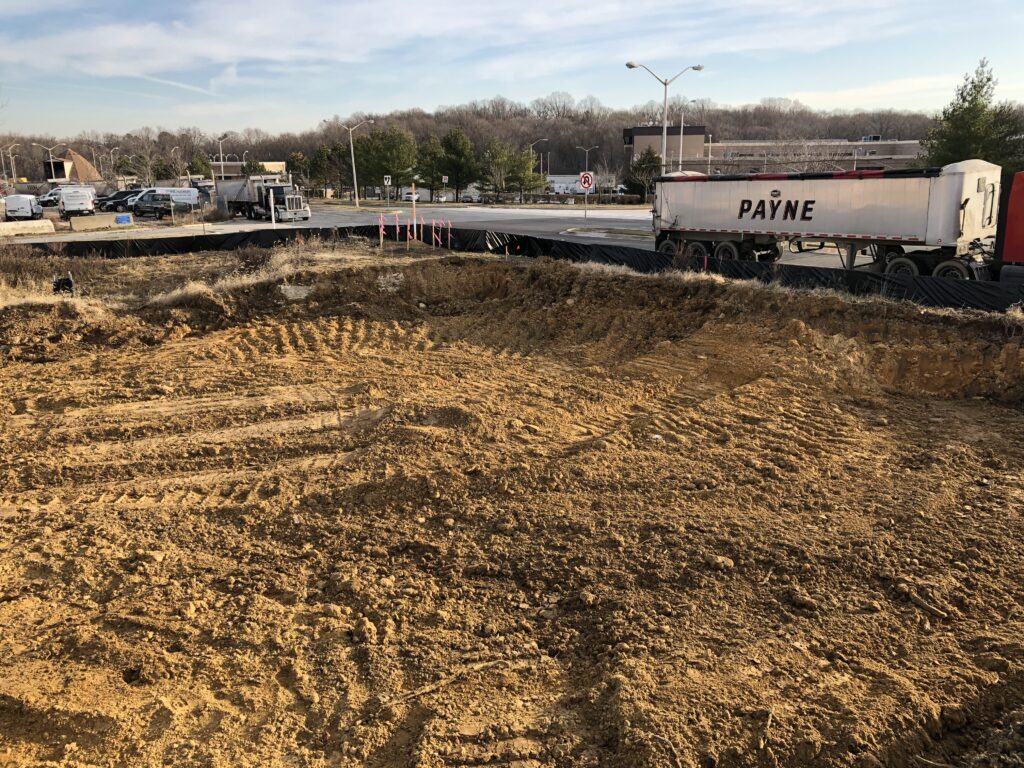
As part of the site remediation strategy, ECS reviewed historical reports and discovered that the site was formerly a part of a much larger industrial property. A review of the historical reports for the adjoining properties allowed ECS to determine the likely area of PCB impact on the subject site. Through the historical report review and site characterization process, ECS was able to demonstrate that the PCB impacted soil was limited to a portion of the site, which allowed the client to continue work in unaffected areas of the property.
What was the outcome of ECS’ rapid response and remediation plan?
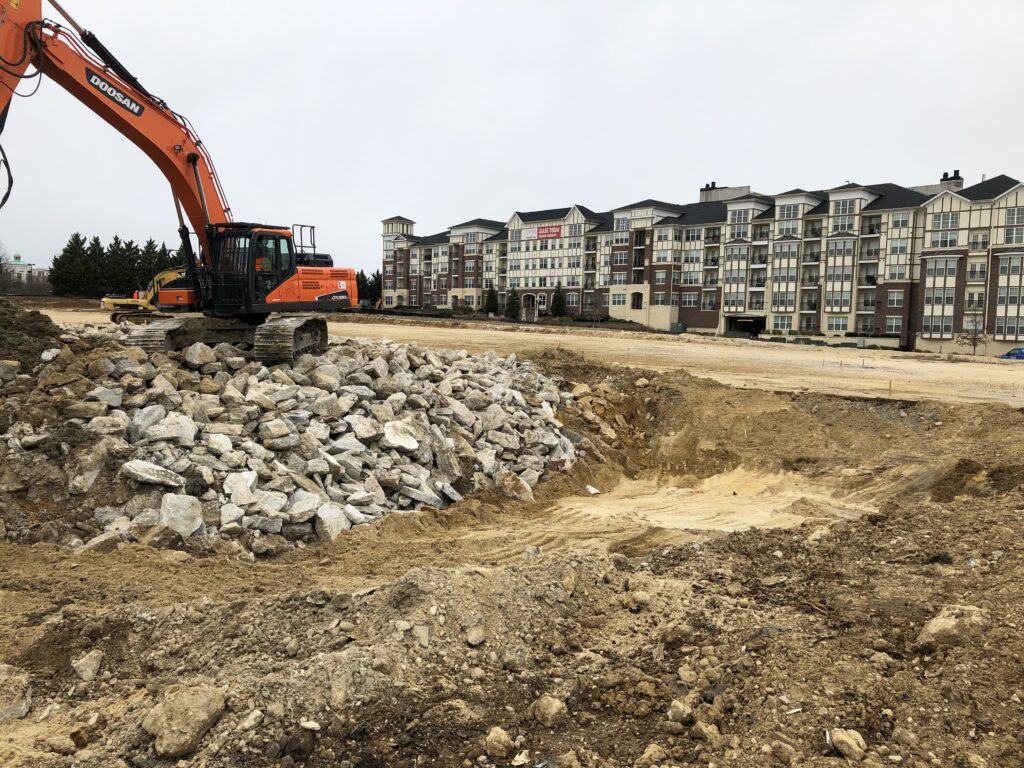
The SIP was quickly and successfully implemented, and the EPA did not require further action. ECS’ rapid response and strategic approach kept the project on schedule and helped the client avoid costly penalties.
Why does this project highlight ECS’ leadership in environmental services?
The client was so pleased with ECS’ performance that they later invited us to team on a $125 million contract. This project demonstrates ECS’ ability to respond quickly, manage complex environmental compliance issues and deliver solutions that align with client goals.